HCC Analytics is an API-first inference engine that reasons from clinical evidence to suspected HCCs — the way a clinician would — and returns the evidence behind every finding.
Send patient records and retrieve structured, evidence-backed suspects. HCC Analytics helps you:
Grounded in Inferscience's clinical rules engine and NLP — not generative-AI guesswork.
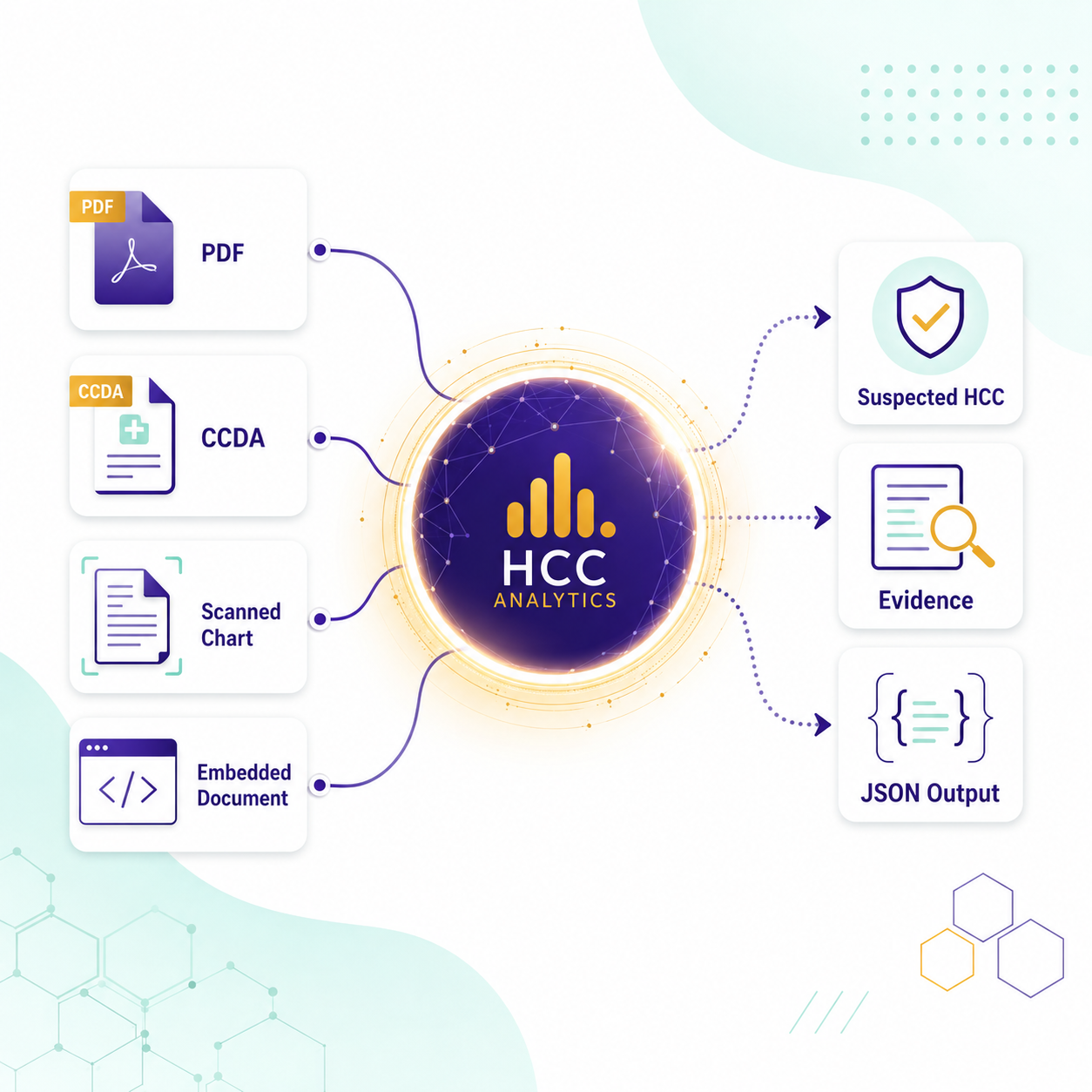
HCC Analytics acts as a backend intelligence layer for risk adjustment. Send patient records — CCDAs, PDFs, embedded clinical documents — and receive suspected HCC conditions paired with the clinical evidence that triggered each finding.
It’s built for technology partners, risk adjustment teams, and organizations that need scalable HCC suspecting without a new EHR deployment.
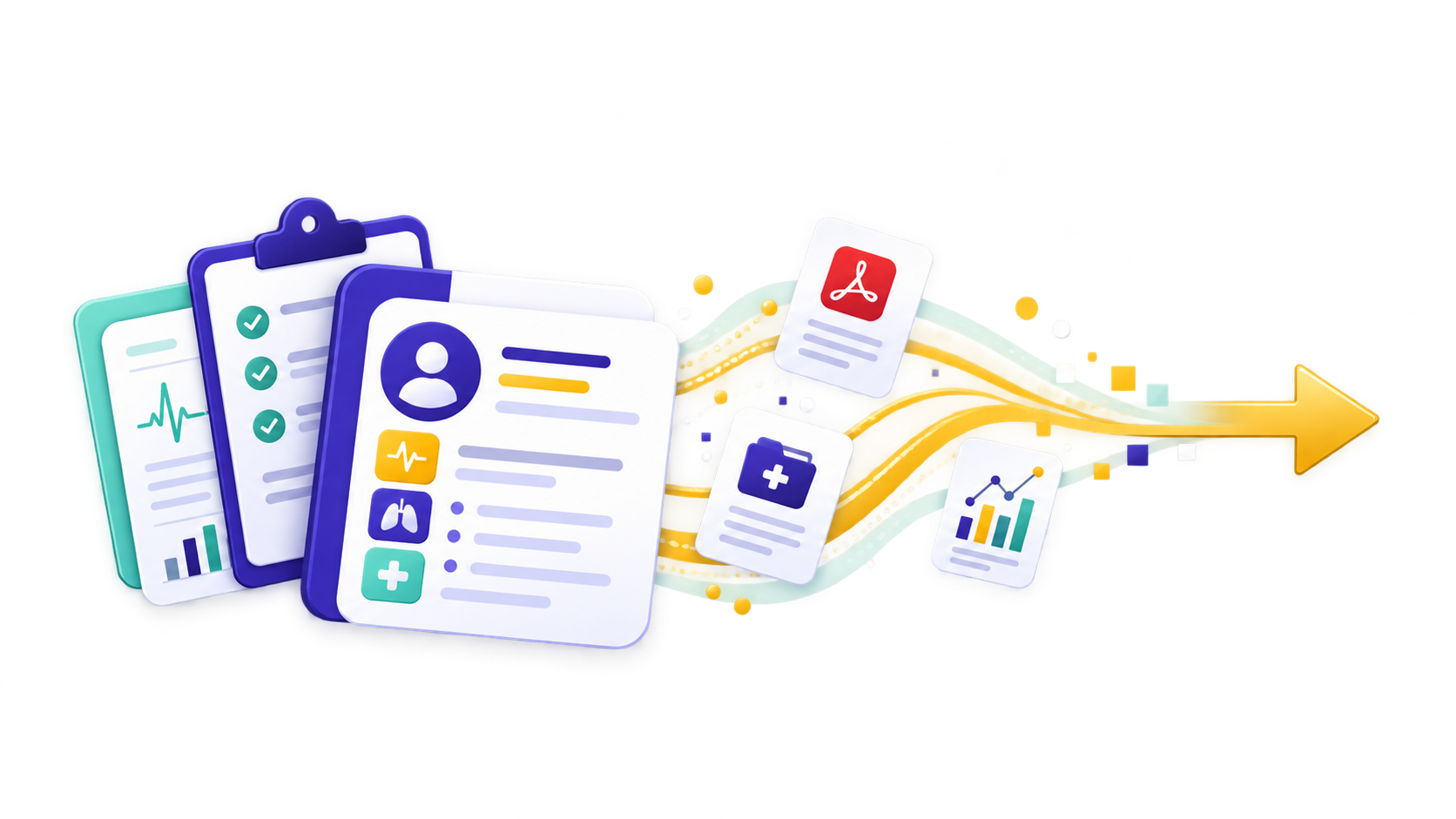
Send patient records to the API — CCDAs, PDFs, or embedded clinical documents, on a per-patient basis.

Inferscience’s NLP and clinical rules engine parse the records and reason from evidence to suspected HCC conditions.

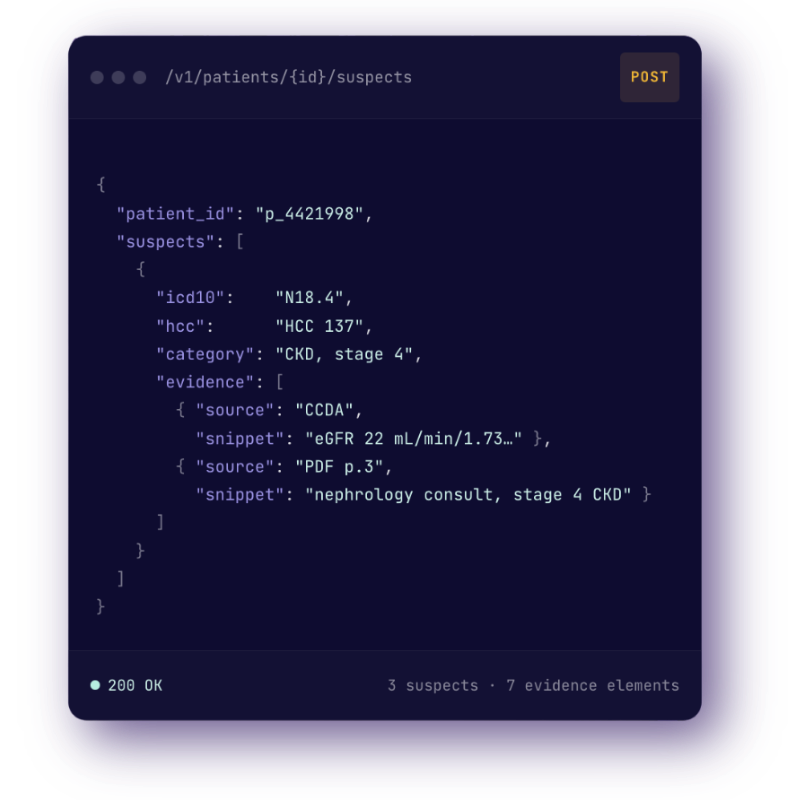
Retrieve structured JSON — suspected HCCs, diagnosis codes, categories, and supporting evidence — in seconds.
Every suspect includes the clinical data elements that triggered the finding rather than only the resulting code. Reviewers see the “why” immediately, without re-reading the chart.
Processes messy, real-world records: CCDAs, scanned PDFs, faxed charts, and unstructured documents embedded inside CCDAs, not just clean structured feeds.
Grounded in Inferscience clinical logic and NLP instead of generative-AI guesswork. Outputs are explainable and defensible, and every inference is auditable.
“In 8 months, our organization has presented more than 269K HCC codes to Providers and Advance Providers. Our coders and 300+ primary care providers find it to be very straightforward and user friendly.”
athenaOne User
Billing Staff, Multispecialty
athenaOne User
Administrative Staff, Multispecialty
“It has been a great opportunity to work with the Inferscience program, it is very user friendly. It enhances our accuracy and consistency with the HCC coding and allows us to produce quality service for our providers.”
athenaOne User
Administrative/Clerical Staff, Multispecialty

Evidence on every suspect:
Each finding ships with the clinical facts and the source document that triggered it, so reviewers validate in seconds.

Flexible JSON output:
Structured results plug into dashboards, coder worklists, partner UIs, or internal analytics anywhere your team works.

No EHR integration required:
Skip lengthy integration cycles. Send data, receive results, and deploy on your timeline. Mapped to the CMS-HCC and ACA models.
Our healthcare API empowers payers and third-party vendors to harness advanced HCC coding analysis, facilitating healthcare interoperability and delivering deeper insights to address the evolving needs of patients, providers, and payers.
Payers or third-party vendors connect the API to their existing system.
Records are uploaded (PDF or CCDA documents), after which the data is extracted and analyzed using intelligent rules.
The API delivers analysis in JSON format that can be retrieved in seconds.
An HCC suspecting engine analyzes a patient’s clinical record and surfaces HCC conditions that appear supported by the evidence but may not yet be coded. HCC Analytics returns each suspect with its diagnosis code, HCC category, and the specific clinical evidence and source that triggered it — so reviewers can validate quickly instead of re-reading the chart.
No. HCC Analytics is API-first. You send patient records (CCDAs, PDFs, or embedded documents) and receive structured results back. There’s no EHR integration project, so most teams can deploy in days rather than quarters.
HCC Analytics is grounded in Inferscience’s clinical rules engine and NLP — not generative-AI guesswork. Every inference is traceable to the clinical facts and source document that produced it, which makes outputs explainable and defensible fof
HCC Assistant is built for provider organizations in value-based and Medicare Advantage arrangements — primary care groups, multispecialty practices, and ACOs — that want to improve RAF accuracy and HCC recapture without adding retrospective chart-review labor. It’s used by organizations ranging from single practices to 700-provider clinically integrated networks.
Structured JSON. Each result includes the diagnosis code (ICD-10), the mapped HCC category (CMS-HCC or ACA model), the clinical evidence that triggered the inference, and a reference to its exact location in the source record.
Health-tech vendors, payers and payer-provider organizations, ACOs and risk-bearing groups, and provider groups and health systems. It works alongside HCC Assistant (real-time coding at the point of care) and HCC Validator (MEAT and RADV-readiness validation).
Run a chart pilot. Send a defined chart set, benchmark detection quality against your own expectations, and review evidence-backed suspects before committing to a full implementation.
Book a demo and our team will reach out within 48 hours.