
HCC Coding Software for athenaOne.
Add real-time, point-of-care HCC coding to athenaOne. HCC Assistant runs natively inside the athenaOne workflow — surfacing missed diagnoses at 98% accuracy, with no separate system to log into.
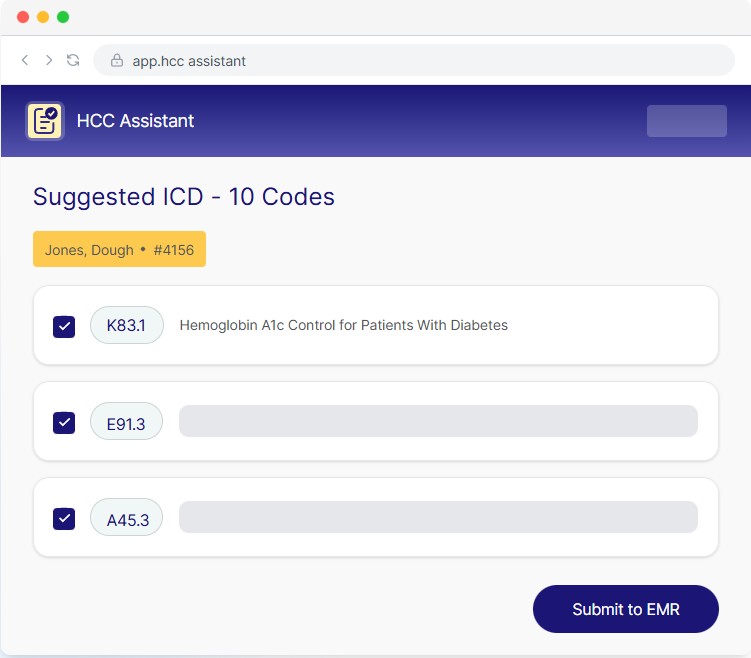
Inferscience's HCC Assistant adds real-time HCC coding to athenaOne — running natively inside the athenaOne workflow so providers surface and submit HCCs during the visit, without leaving the chart. When you're evaluating any HCC coding tool for athenaOne, the most reliable sign of a genuine, maintained integration is an active listing in the athenahealth Marketplace, where partners pass athenahealth's vetting and keep pace with platform updates.
Three signals to check before you commit.
Not every "athenaOne-compatible" claim means the same thing. Before you sign, look for these three.
Active athenahealth Marketplace listing.
The clearest proof of a vetted, maintained integration — partners pass athenahealth's review and keep pace with platform updates.
In-workflow, not bolt-on.
Does the tool surface HCC suggestions inside the note during the encounter — or force you to export charts to a separate system and import results later?
Real-time vs. batch.
Real-time means coding happens during the visit. Batch means a delay and a separate review step after the fact.
The point of integration is to keep providers in one system. Strong HCC coding software reads the athenaOne chart, surfaces suggested HCCs in real time, and lets the provider review and submit codes to the assessment and plan — without leaving athenaOne. Anything that requires a second login or a retrospective export is technically "compatible," but it doesn't deliver the workflow benefit that makes integration worth it.
Real-time HCC coding built for athenaOne.
HCC Assistant runs natively inside athenaOne, surfacing missed and suspected HCCs during the visit — with an evidence trail on every suggestion.
Real-time coding, inside the workflow.
HCC Assistant surfaces missed and suspected HCCs during the visit at 98% coding accuracy — providers review and submit without ever leaving athenaOne.
700 providers · 80,000+ patients.
A three-entity clinically integrated network has coded HCCs with Inferscience inside athenaOne since 2020, earning shared savings under MSSP.
Evidence on every suggestion.
Each suggestion carries a supporting evidence trail for MEAT and RADV defensibility.
CMS-HCC V28.
Maintained against the current CMS-HCC V28 model — 100% for payment year 2026.
No second login.
Review suggestions and submit codes to the assessment and plan from inside the athenaOne chart.
Learn more: Read the case study
Frequently asked questions.
Does Inferscience integrate with athenaOne?
Yes. HCC Assistant runs natively inside athenaOne, surfacing HCC suggestions in real time during the visit and letting providers submit codes without leaving the workflow. It's used by a 700-provider network coding inside athenaOne since 2020.
How do I add HCC coding to athenaOne?
The most direct path is a vetted athenahealth Marketplace integration. HCC Assistant connects to athenaOne so providers see suggested HCCs inside the chart, with no separate system to log into.
Is athenaOne HCC coding real-time or retrospective?
With Inferscience it's real-time (prospective) — HCC Assistant surfaces diagnoses during the encounter, so documentation can be corrected at the source rather than in a retrospective review weeks later.
Which EHRs besides athenaOne does Inferscience support?
In addition to athenaOne, HCC Assistant integrates with Epic and eClinicalWorks, and offers an API for payers and third-party vendors.
Ready to add real-time HCC coding to athenaOne?
See HCC Assistant surface missed diagnoses inside the athenaOne workflow — real-time, evidence-backed, and built to submit during the visit.